bigthinkeditor

“When someone says ‘It’s not about the money, but…’, it’s almost always about the money.” The Boston Globe looks at the phrases we use which betray our true feelings.
“‘Quantitative easing’ is a pompous, uninformative term for a central bank’s buying debt in order to stimulate economic activity.” Judge Richard Posner criticizes new monetary policy.
Male Homo sapiens were historically much faster and stronger than today’s modern man. The Australian palaeoanthropologist Peter McAllister explains why in a new book.
While some consider the English-born physicist the heir to Einstein, others are baffled at his staunch opposition to climate science and the environmental movement.
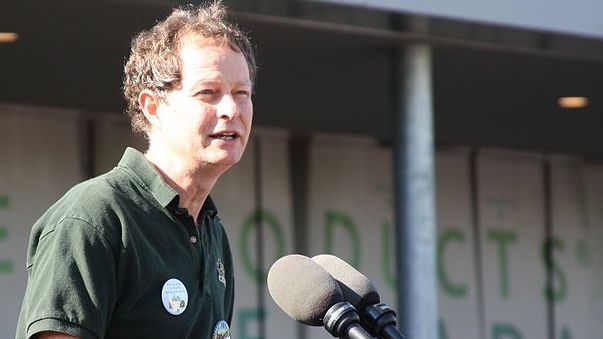
Starting a company makes one a free market capitalist and libertarian, though finding the caring, higher purpose in the marketplace is another matter.
Polemicist and atheist Christopher Hitchens met his toughest opponent yet when diagnosed with cancer. It doesn’t yet seem to have altered his beliefs on Iraq, on Islam, or God.
The Independent says Aung San Suu Kyi’s release is cause for celebration – but we have to be realistically doubtful about the prospects of change in Burma.
Less-visible insecurities linger from its recent chaotic past and drive this country’s politics. China’s strengths, and its weaknesses, should be measured with care.
What I do know is that playing football has taught me many things. Perhaps the most important: knowing how to react when chaos is going on around me.
Inside the mind of Albert Gonzalez, America’s most notorious computer hacker. “Whatever morality I should have been feeling was trumped by the thrill.”
Historic successes and colossal failure are often fueled by the same impulses: ambition, audacity, passion, and a burning desire to comment meaningfully on the world around us.
Tim K. killed 15 people before turning his gun on himself. His father, the owner of the weapon, is now in the dock. How culpable can parents be if their child kills?
Four movements that gained huge followings and have stood the test of time: est, primal therapy, Transcendental Meditation and lucid dreaming. Where are they now?
Last week’s visit by the pope was largely ignored by Spaniards. Grassrootsrnreligious groups say the time has come for a full separation of state and Church.
Less obsolete but more annoying than a handwritten letter, the phone call is fading as a mode of communication even if the nostalgic will be singing its praises for a while.
Novelist Margaret Atwood recently shared her vision of the future where more and more people flock to cities despite the substandard quality of life they offer.
New evidence from a Texas capital punishment case demonstrates the death penalty was unjustly applied. It is the first such case ever against the death penalty.
“Do the billions of non-neuronal cells in the brain send messages of their own?” Nature’s Kerri Smith reports on a change in our understanding of the brain decades in the making.
“China holds all those dollars while the US holds the key to what they will be worth. It is a Mexican stand-off in which we could all be hurt.” The Guardian reports.
“Google TV may change the boob tube forever. But does the Internet really make for must-see TV?” Kevin Sintumuang writes a love letter to his television set.
Recent studies suggest that we derive more satisfaction from things we create ourselves. Known as the Ikea Effect, it could also explain American obesity, says Jonah Lehrer.
The world’s largest virtual real-estate deal took place this week on Second Life, a virtual world where people spend real money. The fictitious property went for $335,000.
Creating clean energy jobs is the wrong way to undo the recession, says Forbes’ Mark Mills. Today’s energy infrastructure represents a minor section of the American economy.
Religious families tend to have more children than atheist ones. From an evolutionary standpoint, this suggests belief in God is better suited to survival, says Phillip Longman.
Will Facebook’s plan to give its users @facebook.com email accounts rival Google’s Gmail? Tech Crunch thinks Facebook could do a better job at organizing the inbox.
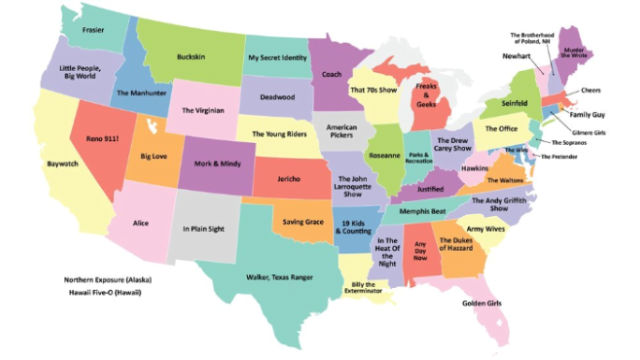
Last week, Big Think blogger Frank Jacobs featured “The United States of Movies,” on his blog Strange Maps. The map, originally posted Reddit, assigned a movie to every U.S. state […]
Much of the privacy that so many of us cherish has been an economic fluke. Tracking technology has spun far out of control but the privacy problem is really one of our own making.
A study said to shake psychology’s foundations finds that daydreaming is rarely helpful. Furthermore, it challenges the idea that the mind responds to a stimulus out in the world.
It will take a revived patriotism to motivate Americans to do what needs to be done. …How can you love your country if you hate the other half of it?
Spiegel interprets envy and egotism at this year’s G-20 summit as a sign the days of close cooperation among the world’s big 20 economic powers may have ended.