bigthinkeditor

The secret military reports leaked by WikiLeaks demonstrates that while official strategy is to empower Afghanis to run a modern country, the Afghans treat foreigners as the true power.
A Harvard psychologist and dream expert explains how it is possible to influence what you are dreaming about whether you want to fly, stop a nightmare, or have lucid dreams.
“Boredom may be an intrinsic part of life for practically everyone, but it needn’t be destructive. In fact, boredom can be a force for good.” Give kids freedom, says one commenter at The Guardian.
“The fears about online wagering are demonstrably bogus,” says Steve Chapman at The Chicago Tribune, who was pleasantly surprised when a House committee approved online gambling.
“Looking around the United States in the summer of 2010, hysterical moral panic seems an apt description of our fevered political condition.” A columnist on our nation’s current “moral panic”.
Social networks like Twitter not only blur the line between public and private selves, but also between authentic and contrived ones. An author finds herself inventing her own psychology.
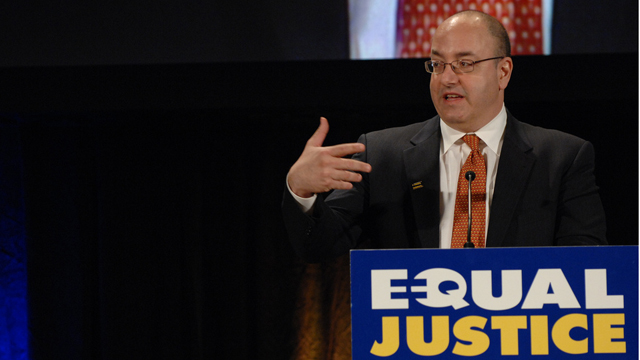
Globalization has transformed the practice and study of law, says Larry Kramer, the dean of Stanford Law School. American law firms have dominated the internationalization of law, but this has […]
Jayne Merkel, architectural historian and critic, locates the moment in American architectural history when less ceased to be more and inspiration was found in yesterday’s buildings.
Steve Chapman attends a National Organization for Marriage speech and sees how defenders of traditional marriage hope to use their raucous critics to their own advantage.
“Chevy Volt will sell for $41,000 before a federal tax credit, while the Nissan Leaf will go for $32,780 before the credit. The two cars are trying to jump-start the US electric-car industry.”
“I’m sure that Julian Assange is now regarded as one of the very most dangerous men and he should be quite proud of that,” says Daniel Ellsberg, who leaked the Pentagon Papers.
“Why learn about the glass ceiling in a sociology class if you are going to hit it anyway a decade after graduation?” A liberal arts professor meditates on the the liberal arts conundrum.
“People who fake symptoms of mental illness can convince themselves that they genuinely have those symptoms, a new study suggests.” Scientific American on the power of the mind.
“It is the poor, not the rich, who are inclined to charity.” The Economist reports on a study that finds the less affluent are quicker to compassion and more willing to give to the needy.
“Ocean life is being wiped out from the bottom up,” reports the New Scientist. Recall from your high school food chain diagram that the smallest critters are the most important.
“The truth lies somewhere between ‘men oppress women with their uncontrollable needs’ and ‘women oppress men with their socially constructed monogamous love.’”
Being the bottom rung on the social ladder causes enough stress to shorten your life, according to a study of British social servants. Lack of control was the main cause of despair.

Until James Currier had four sons in 36 months, he was just a regular Silicon Valley entrepreneur. Having sold a start-up called Tickle to Monster in 2004, he took some […]

What is a collateralized debt obligation (CDO) anyway? And why did it get the United States into so much trouble? According to NYU economist Robert Engle, CDOs are “wonderful creations” […]

“The burqa is not religious headwear; it is a physical barrier to engagement in public life adopted in a deep spirit of misogyny,” says The Stone column at the New York Times.
“The most surprising thing about WikiLeaks’ released trove of officially secret documents is how few surprises it contains.” Doyle McManus says the government has been candid with us.
A new study by economists Mark Zandi and Alan Blinder says the U.S. economic stimulus averted a worse downturn, says The Guardian. Conservatives maintain the spending was ineffective.
History professor Mark LeVine examines the complex relationships between immigration, globalization, and natural resource extraction. He sees a system that stratifies wealth.
“We’ll increasingly be defined by what we say no to,” says Paul Graham. The essayist writes that technological development creates addictive products from drugs to the Internet.
“An anthropologist argues that polygamy is harmful as Canada considers whether having multiple wives is a constitutional right.” Our neighbors to the North take a surprising turn.
A private university in England has changed their curriculum to offer a two-year degree and its students highly approve. A two-year degree may make more economic sense in our times.
“Overall, social support increases survival by some 50 percent, concluded the authors behind a new meta-analysis.” Scientific American reports on the effects of our spreading social isolation.
Job retraining seems like an ideal solution for the unemployed, but problems persist. Are Americans being trained for the right jobs, and what if nobody is hiring in the first place?