bigthinkeditor

“Experts writing this year’s dietary guidelines say strong evidence indicates that moderate alcohol consumption results in a longer life and slower cognitive decline.”
Without the ability to daydream and hallucinate, computers will never think as humans do. David Gelernter, Yale professor of computer science, predicts the next stages of AI.
“Amazon reports that sales of e-books have finally surpassed sales of hardcovers. That’s a pretty momentous development.” Megan McArdle at The Atlantic thinks the Kindle’s day has come.
“MIT political scientists demonstrate how much candidate appearances affect election outcomes, globally.” Good looks seem to win out across cultures with very different histories.
“So even though a meat-free world sounds good on paper, it is likely that a utopian future will still have some animal products in it. And we are talking meat, not just milk and eggs.”
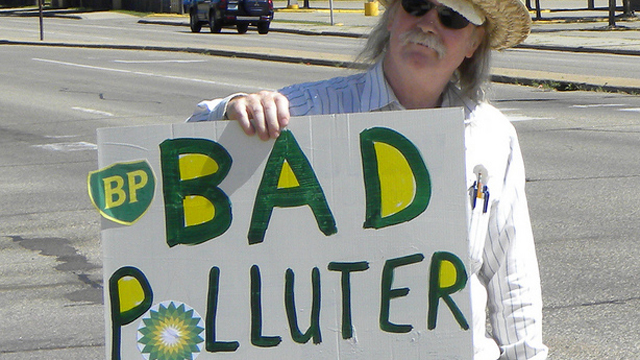
How can companies like BP recover from devastating PR disasters like the recent oil spill in the Gulf of Mexico? Just get the cleanup done, and keep the public informed, […]
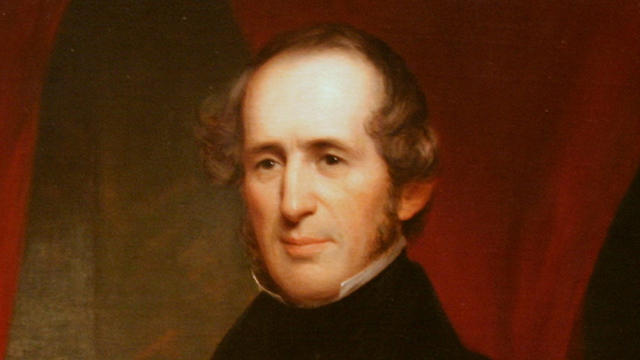
Are CEOs rewarded more for their perceived success or the success of their companies? In his recent Big Think interview, biographer T.J. Stiles says robber barons like Cornelius Vanderbilt may […]
“In a marriage, the common symptoms of A.D.H.D.—distraction, disorganization, forgetfulness—can easily be misinterpreted as laziness, selfishness and a lack of love and concern.”
“Is our modern mobility sustainable? We are facing an energy crisis, a climate crisis, and an economic crisis—and perhaps a mobility crisis as well.” An urban studies professor on the car.
Charles Simic recalls the excuses he offered the first time he watched his native Yugoslavia lose at the World Cup. The poet lists the four universal excuses given when a soccer team loses.
A new history of voting through the ages is timely, says The New Yorker, as the U.K. prepares for electoral reform while the U.S. holds out against newer and fairer electoral methods.
“Marijuana is one of the top cash crops in the United States. So why is there so little coverage of this business, as a business?” The Big Money inaugurates a blog on the marijuana trade.
“Scientists yesterday hailed a potential breakthrough in the fight against Aids after a vaginal gel was found to cut HIV infection rates by up to 50 per cent.” The Independent reports
“How can the United States legitimately claim the right to promote democracy and human rights at the same time that, at home, it is becoming somewhat less democratic, and a great deal less just?”
“Despite the hype surrounding microfinance as an answer to solving world poverty, new research shows it isn’t the savior economists envisioned.” Read more at Miller-McCune.
The head of the UN Environmental Programme’s Green Economy Initiative, Pavan Sukhdev, sits down for tea with The Economist to discuss how to assign an economic value to nature.
A lengthy investigation by the Washington Post reveals the resurgence of the military-industrial complex since 9/11 and how expensive and unaccountable private contractors fill our ranks.

Screenwriter Danny Rubin says that he came up with the idea for the classic comedy “Groundhog Day” while thinking about the idea of immortality—and, specifically, how a person might change […]
“The public health establishment has been wrong before. The best advice that government can give citizens is to develop their own diet and exercise plans.” Read it at the L.A. Times.
The American credit crisis was a direct result of widening income inequality, says Daniel Indiviglio at The Atlantic. Achieving the American Dream came to mean drowning in debt.
“The most underrepresented groups on elite campuses often aren’t racial minorities; they’re working-class whites (and white Christians in particular) from conservative states and regions.”
“For people with depression the world really does look dull. That’s because their ability to perceive contrast is impaired.” A new experiment could help diagnose clinical depression.
“Us ranchers on the Great Plains are used to adapting. City folk could learn much from the way we use our scarce resources.” One conservationist rancher writes about her hopes for The Guardian.
“Any effort to bring peace between Israelis and Palestinians must reckon with the fact that bitter experience has taught many Israelis to doubt that their foes want a lasting concord.”
“The mass-deportation fantasies of some restrictionists notwithstanding, the great majority of ‘illegals’ are here to stay.” The New Yorker draws the borderlines of the real immigration debate.
“The finance industry, regulators, and political leaders need to create a shared sense of collective responsibility for the system as a whole,” says Nobel Laureate Michael Spense.
Did Obama abuse the power of the Presidency when he told BP to create a $20 billion escrow account? “Yes,” say Nobel Laureate Gary Becker and Judge Richard Posner at the U of Chicago.
A Harvard psychologist says we group people into two broad categories: “moral agents” and “moral patients”; those who take action and those who receive the actions of others.

From Mel Brooks to Woody Allen to Jackie Mason to Sarah Silverman to Sacha Baron Cohen, Jewish comedians have a long and celebrated history of telling jokes about their own […]
Between the equally persuasive arguments for and against monogamy exists real life. Michael Thomsen at The Faster Times came and went from monogamy but remains monoamorous.