This was originally published on the Scientific American guest blog on February 5th How much does environment influence intelligence? Several years ago University of Virginia Professor Eric Turkheimer demonstrated that […]
Search Results
You searched for: G��k��in ����n
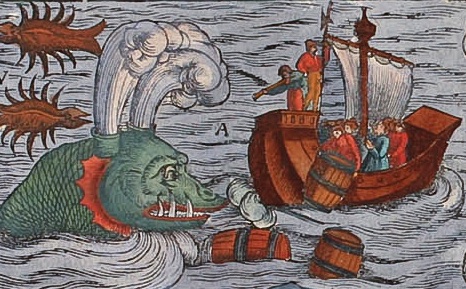
One of cartography’s most persistent myths: mapmakers of yore, frustrated by the world beyond their ken, marked the blank spaces on their maps with the legend Here be monsters. It’s […]
Update (Jan, 2014): Amir’s patent application (search for no. 12/743357) has been rejected due to prior art by Mathews and MacLeod. Update (Feb, 2013): Following this blog post Amir corrected two […]
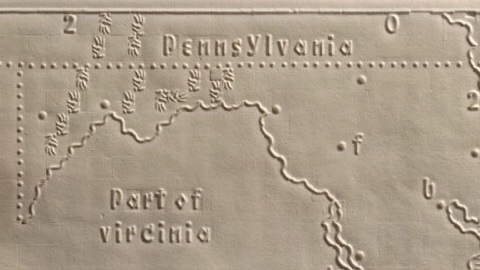
These specially-made relief maps showed blind children were sensitive to the geo-distributive aspect of maps
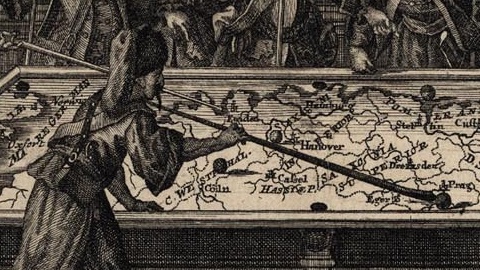
Just before Rip Van Winkle falls into his thirty-year slumber, he encounters the ghostly spectacle of a handful of ancient Dutch colonials playing at ninepins, the thunder rolling across the […]
This semester I am teaching a doctoral seminar on the important questions and trends related to media, technology and democracy. In this post, I introduce several major topics and provide […]
In a report published in January 2011, 75% of the students surveyed said that they would prefer printed textbooks over digital textbooks. About one week ago, the Kno app for […]
Public opinion about climate change, observes the New York Times’ Andrew Revkin, can be compared to “waves in a shallow pan,” easily tipped with “a lot of sloshing but not […]
This semester, 22 undergraduate and graduate students from a diversity of majors at American University have participated in a new course that I created titled “Science, Environment and the Media.” […]
Michael Petrilli’s article on the education blogosphereis now available at Education Next: n n Press release n Article (you can get a PDF version too) n n Here’s a quick […]
[cross-posted at Moving at the Speed of Creativity] nn U.S. Secretary of Education Margaret Spellingsnis under fire. Not only is the Department of Education dealing with the ReadingnFirst corruption scandal, […]
Yesterday I attended a session at TIES (the Minnesota state educational technology conference) by Keith Krueger, CEO of CoSN. Keith presented some findings from a report on Hot Technologies innK-12 […]
[cross-posted atnLeaderTalk] n In my post for LeaderTalk thisnmonth, I’m going to quickly address three ideas related to video games,nschools, and learning and offer a short wrap-up at the end… […]
From Roger Schank at The Pulse: n n [T]there is no evidence whatsoever, that accumulation of facts and background knowledge are the same thing. In fact, there is plenty of […]
Here are my notes from Tuesday’s Professional Development Roundtable sponsored by the State Educational Technology Directors Association (SETDA). This was an EXCELLENT conversation. n Effective professional development for educators n […]
[cross-posted at the TechLearning blog] nn We can imagine a continuum of frequency of technology usage that looks something like this (click on image for larger version): n n People […]
Yesterday I concluded my series of posts related to gaming, cognition, and education. The purpose of the series was to illustrate some of the powerful learning principles that are present […]
A few days before NECC I was invited by a publicist to interview Julie Young, the Executive Director of the Florida Virtual School (FLVS), and also speak with the folks from […]
[cross-posted at the TechLearning blog] n Two weeks ago I reported on my second effort to catalog the edublogosphere, to put some shape and form to the amorphous network, to […]
Today I continue my week-long series related to gaming, cognition, and education. If you recall from yesterday, I am approaching this issue with the following question in mind: Why is […]
[cross-posted at the TechLearning blog] n Many of you know that I occasionally try to wrap my head around various aspects of the education blogosphere. In the past I’ve written […]
See below – a message I sent out over a few listservs – thought I’d post it here too. Please forward on to others and consider participating yourself (if appropriate). […]
Obesity is a growing global health problem, and we all know why, don’t we? It’s the fault of corporations that sell corn syrup, and a starkly unequal society (why would […]
It’s plain to see that I’m an optimist, sometimes more than is socially comfortable. The ease with which I dismiss the disastrous economic decline above serves as one example of that. I wrote that the recession will benefit our political system, and, before I cut this line, as having “rewarded our company for methodical execution and ruthless efficiency by removing competitors from the landscape.” I make no mention of the disastrous effects on millions of people, and the great uncertainty that grips any well-briefed mind, because it truly doesn’t stand in the foreground of my mind (despite suffering personal loss of wealth).
Our species is running towards a precipice with looming dangers like economic decline, political unrest, climate crisis, and more threatening to grip us as we jump off the edge, but my optimism is stronger now than ever before. On the other side of that looming gap are extraordinary breakthroughs in healthcare, communications technology, access to space, human productivity, artistic creation and literally hundreds of fields. With the right execution and a little bit of luck we’ll all live to see these breakthroughs — and members of my generation will live to see dramatically lengthened life-spans, exploration and colonization of space, and more opportunity than ever to work for passion instead of simply working for pay.
Instead of taking this space to regale you with the many personal and focused changes I intend to make in 2009, let me rather encourage you to spend time this year thinking, as I’m going to, more about what we can do in 2009 to positively affect the future our culture will face in 2020, 2050, 3000 and beyond.

The Eyjafjallakokull eruption in Iceland added some explosivity to its bag of tricks, but so far it seems to be just steam-driven explosions.
n How little information do you need to be able to draw a map? This zen-like question provided the basis for a short article in the May 21st, 1971 issue of […]
The last of Etna Week here on Eruptions has guest blogger Boris Behncke talking about the volcanic hazards posed by Mt. Etna.
n “Thanks to Unicode and OpenType, modern fonts are overcoming thelimitations of traditional European typography. The size of the countries on this map does not correspond to their geographical area, […]
n Have you ever seen the constellation named ‘The Tyrants’, spanning the stars Robespierre and Kubla Khan, stringing together Hitler, Mussolini and Attila along the way? Or how about the […]
nn n It seems impossible to find an online map showing all of the European Union’s so-called Euroregions. Why doesn’t the EU showcase these transnational regions, conceived to promote economic […]