bigthinkeditor

“Needless to say, it is not just the financial crisis that gets reduced to rash hyperbole.” A sociologist asks why our political discourse is often reduced to platitudes (it’s not because we’re dumb).
“Three volunteers running the distributed computing program Einstein@Home have discovered a new pulsar in the data from the Arecibo Observatory radio telescope.” Wired Science reports.
“America’s biggest—and only major—jobs program is the U.S. military.” Robert Reich says we need a jobs program for public goods like light-rail and renewable energy, not outmoded weapons.
“The search for artificial intelligence modelled on human brains has been a dismal failure. AI based on ant behaviour, though, is having some success.” Now engineers study ant collectives.
“The Democratic Party has moved to the left even as its take from financiers has soared,” says a new book on politics. Slate replies that a Democratic move to the right better explains the donations.
“So far, so Minority Report.” The New Scientist heads to Los Angeles to investigate the development of gesture-based computing, a fun exercise intended for serious number crunchers.

David Adamovich throws knives for a living. Really big knives. With 25 world records under his belt, Adamovich is the world’s fastest and most accurate knife thrower. He also holds […]
“By focusing all our attention on whether we need a bigger stimulus or a smaller deficit, we’re flying blind.” TNR says we should concentrate on deeper reforms toward a knowledge based economy.
“Is a strategy of killing off Mexico’s drug kingpins really viable?” ‘Yes’, says a researcher at the University of Mexico, but only because political will to legalize and regulate drugs is lacking.
Climate change deniers who fault others for not verifying the underlying science set an unachievable standard. We rightly trust the consensus of experts in nearly every aspect of our lives.
Those decrying the death of the intellect, and the book, at the hands of the nefarious Internet would do well to recall that the printed page itself was once called the destroyer of education.
“Many problems which are more prevalent lower down the social ladder are worse in societies with bigger income differences, and second, almost everyone would benefit from reduced inequality.”
Ironically, the age of the iPod has made finding new music harder than ever. The Atlantic begins a three part series on going beyond the radio to discover what’s new in music town.
For the first time ever, scientists have made an invisibility cloak from silk. Current research focuses on medical applications for diabetics while visions of Harry Potter remain far afield.
“A lack of women during men’s teenage years still haunts their health decades later.” The Economist reports on a surprising study that hints at an important formative sexual period.
“The point in prehistory when our early ancestors first picked up a sharp-edged stone to butcher animals has been pushed back one million years with the discovery of ancient bones.”
New bilateral free trade agreements with Colombia, Panama and South Korea are important tools for reviving the economy, boosting American exports and competing with Canada.
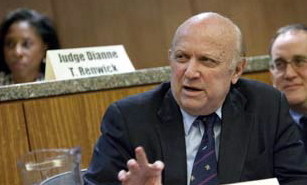
“America has always been the country in the world with more protection for speech,” says legendary First Amendment Lawyer Floyd Abrams, adding, “there’s really an astonishing, a breathtaking degree of […]
Salt and Salander flip conventional notions of gender roles. Are they the new models of millennial femininity while sacrificing being “real” women, asks Luisita Lopez Torregrosa.
The efforts of tens of thousands of players in an online game provided a rich, new set of search strategies for the prediction of protein structures. “Nature” explains the implications.
Out-of-control Jersey Shore cast member Snooki reveals the ever-shrinking gap in America between who we are and how we broadcast ourselves to the world, Max Fisher considers.
Cancer cells love sugar. More specifically, fructose and glucose fuel pancreatic cancer cell growth. More reason to rein in your sugar consumption, says Conner Middelmann Whitney.
Quality, not cost, is the reason companies cite for their increasing investment in open source software, says Amy Vernon in a report on an Accenture survey.
As the German military pays $5,000 to every family that lost a member in an airstrike in Afghanistan, Spiegel looks at how much the life of a dead civilian is worth.
Are many of the unemployed stupidly and stubbornly holding out for a higher wage than they can get? Tyler Cowen says no but that many do not face an easy adjustment.
Explaining our predisposition to religious belief, just as scientists can explain taste and perception of color, does not make it a nonsense, says neuroscientist Michael Graziano.
Karl Walling, the strategy professor falsely accused online of advocating rape in a lecture, considers the cost of protecting academics from such outrages.
Scientists are finding that what we find freakish or unsettling in other species offers fresh insight into how we anthropomorphize our perceptions into a revealing saga of ourselves.

Ohio State University law professor Douglas A. Berman says everyone affected by society’s laws ought to have a right to vote—even if they have to mail in their ballot from […]
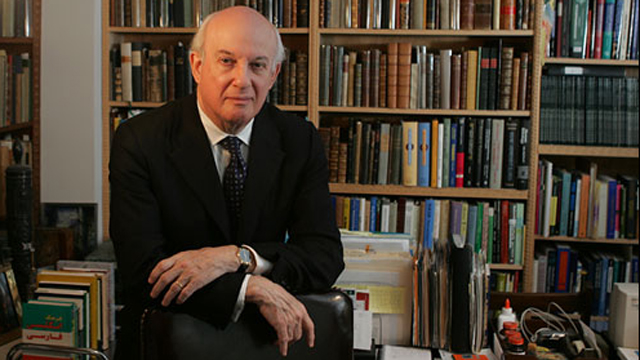
Michael Stone is an expert on evil. A forensic psychiatrist and professor at Columbia, Stone has cataloged and classified evil acts into a 22-point scale for his show on the […]