bigthinkeditor

“Mathematicians are facing a stark choice—embrace monstrous infinite entities or admit the basic rules of arithmetic are broken.” The New Scientist on mathematic’s new uncertainty.
Judge Richard Posner supports a value-added tax as part of an overall tax reform plan to encourage entrepreneurial development and avoid increasing the debt burden on the future.
“A team of MIT engineers has devised a way to deliver the necessary drugs by smuggling them on the backs of the cells sent in to fight the tumor.” The procedure reduces health risks.
The idea that knowledge produces fact while imagination produces fiction is wrong, says a professor of logic at Oxford. Imagination is crucial to fundamental cognitive abilities.
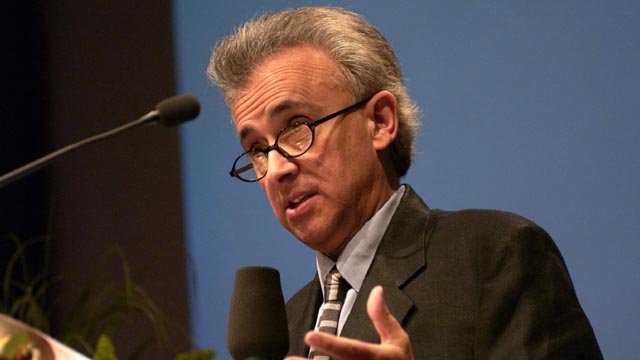
This past week, three top experts stopped by the Big Think offices for a video interview: behavioral neurologist Antonio Damasio, C++ creator Bjarne Stroustrup, and kidnapping victim Stanley Alpert. USC […]
While Italy is now famous for its use of the red tomato on pizzas and pastas, the food was introduced the country relatively recently. A historian on how we all came to love the tomato.
“Contrary to the Machiavellian cliché, nice people are more likely to rise to power. Then something strange happens: Authority atrophies the very talents that got them there.”
“We think of writing as an author’s cognitive output, but it has a corporeal dimension—writing is an embodied practice.” The Smart Set on the loss of novelists’ female transcriptionists.
German architect Christoph Ingenhoven says the attitude which defines modernism is against superfluous design and that many Asian cities are modernizing in all the wrong ways.
“Sometimes it is possible to do good only in secret.” Princeton’s Peter Singer believes that complete transparency is utopian, but that a more transparent world is generally desirable.
Roger Ebert knows (and celebrates) the void beyond life. He recalls his own bout with cancer and near-death experience to comment on Christopher Hitchen’s cancer diagnosis.
Consumption of marijuana should be legal, but selling it should not be. Mark Kleiman at The Atlantic fears marketers would peddle the vice just as they have alcohol and fast food.
Google CEO Eric Schmidt says that technological advancement has historically struck a blow against privacy, but that more transparency in society creates more trust among its members.
“How do you find contentment in an acquisitive society? By changing the things you spend your money on, says a U.S. academic.” The Independent reports on the upside to the recession.
If a new suggestion is adopted to the Statistical Manual of Mental Disorder, many people who experience normal bouts of grief could be diagnosed with having a psychiatric problem.
As digital technology increasingly responds to our behavior in realtime, the qwerty keyboard and other hallmarks of our analog experience of life may become relics of the past.
British philosopher Roger Scruton says false hope is the biggest danger to humanity and that doses of pessimism help keep us on track toward gradual positive social change.
French President Nicolas Sarkozy’s call for the exhumation and reburial of the French-Algerian writer Albert Camus in Paris recalls Molière’s burial, which became a divisive political issue.
While no American representatives were reported in attendance, a recent meeting of the world’s far-right political parties in Tokyo demonstrates that fear and violence know no borders.
“Maybe it’s time waterbeds made a comeback.” The Atlantic wonders why the bed that once boasted a better sex life and (eventually) a good night’s sleep became so unpopular so fast.
“An Obama task force says that carbon capture—in which greenhouse gas emissions would be stored underground—is feasible. It’s seen as a promising way to combat global warming.”
Professor of law and philosophy Martha Nussbaum says the U.S. should continue to insist on a humanistic higher education. Korea and India demonstrate economic prosperity needn’t be sacrificed.
What happens when state budget cuts pinch criminal justice resources? The Economist says creative solutions emerge, solutions which are in turn more just than their predecessors.
“Could financial incentives that encourage fat people to lose weight solve the obesity crisis?” Experiments in paying people to lose weight have met with success in the U.S. and U.K.
“Americans, plugged in and on the move, are confiding in their pets, their computers, and their spouses. What they need is to rediscover the value of friendship.”
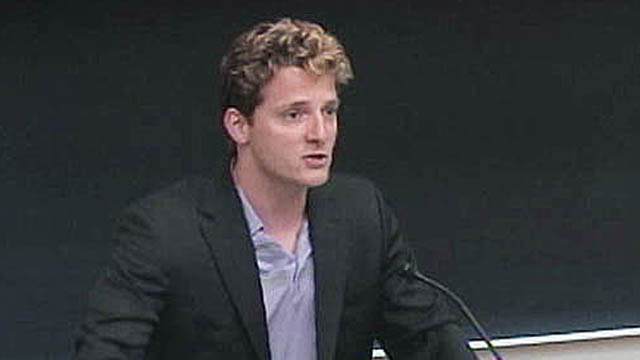
“Over the last decade there has been a fundamental revolution in how we communicate,” says Matthew Nisbet, professor of communications at American University and Big Think’s newest blogger. The rigid […]
American support of President Hamid Karzai in Afghanistan mirrors its ill-advised support of Ngo Dinh Diem in Vietnam. A shortsighted and simplistic foreign policy is to blame.
Mexico’s President Felipe Calderón has militarized his country’s war on drugs, a task once reserved for the police. The consequences have been dire, says the editor of Mexico’s La Jornada.
“China’s growing thirst for water is driving one of the world’s biggest mass relocations, with 440,000 people leaving their homes to make way for a huge man-made canal project.”
“Dawkins ignores the possibility that God is a very different sort of being than brains and computers.” A philosopher explains his claim that Dawkin’s arguments are ‘demonstrably faulty.’