bigthinkeditor

Can WikiLeak’s release of tens of thousands of secret documents accurately be called ‘a leak’, or is ‘gush’ more appropriate, or is that just silly? One author on the history of the political leak.
The governor of Indiana is ‘a likeable wonk’, says The Economist. This is one reason he might run for President. The other is that the GOP’s current prospective candidates are ‘nauseating’.
“When people search [the Internet], they aren’t just looking for nouns or information; they are looking for action.” A venture capitalist says search engines are changing for the better.
A Japanese inventor has created a machine that turns ordinary plastic waste into oil. The oil can be used as an engine lubricant or further refined to make gasoline, diesel and kerosene.
“Not every investor is trembling with anxiety over the next financial blowup. Some are embracing the market’s volatility—and constructing portfolios to profit from it.”
A history professor at Boston University says the Iraq War is far from over. “The war launched to achieve regime change in Baghdad metastasized into three wars.” None of which are over, he says.
The government of Chile is recruiting American entrepreneurs to spend six months starting a business in Santiago, offering each candidate $40,000 and a one-year visa to the country.
New York Times journalist Andrew Sorkin discusses his take on the Wall Street crash, whether financial CEOs are evil, the future of journalism and how business is likely to change in the future.
Michael Kinsley at The Atlantic vents his frustration over political polls that entitle people to their often ludicrously incorrect opinions and ask questions fit only for experts.
The corruption of U.S. financial markets, whose CEOs habitually buy up expensive art, is mirrored by an unregulated art market where it is difficult to tell between hoax and truth.
Do psychological diseases have a shelf life? “The idea of Attention Deficit Hyperactivity Disorder (ADHD) as a credible diagnostic term has passed and it is time that we accept that and move on.”
“Everyone looks better after you’ve tipped back a pint or two, and now we may know why.” Discovery News says that our ability to detect facial symmetry—a metric of beauty—diminishes.
Slate reports on why we love us a good summer scandal, whether its Gibson or Blago: “If communities are enclaves of shared norms, then scandals are what consolidate a community.”
From commercial airplanes whose exhaust trails are secret experiments in weather control to the New Jewish World Order behind the Federal Reserve, everyone is out to get the paranoid Right.
“Scientists suggest that some psychedelics are remarkably good at treating disorders like depression and may now have a clue as to why.” Studies on psychedelics may create new treatments.
“While America’s super-rich congratulate themselves on donating billions to charity, the rest of the country is worse off than ever.” Der Spiegel reports on the rising rich-poor gap in the U.S.
“Scientists are increasingly worried about the amount of debris orbiting the Earth.” The Economist says the number of potential collisions among space satellites has doubled in the last decade.
Are our cities making us unhappy? The diversity of plant life surrounding us affects several quality of life metrics such as the ability to concentrate, relax and make major life decisions.
When cultural practices deny people equal access to rights such as education, physical and emotional well-being, we must cease to tolerate difference under the guise of multiculturalism.
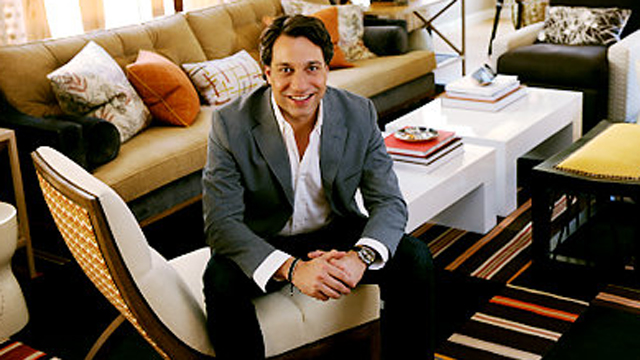
There is a big difference between manners and good taste, says interior designer Thom Filicia, one-fifth of the Fab Five from Bravo’s popular “Queer Eye” series. Knowing what society requires […]

“Is the purpose of public education to nurse students or to teach them?” asks Brian Crosby, a twenty-year veteran high school English teacher and the founder of the American Education […]
A new study of birds concludes that parents get more help when they are sexually faithful to each other and “leaves little doubt that promiscuity corrupts social life in birds.”
In the Atlantic Wire series looking at how people stay on top of the news without surrendering to its chaos, Wired magazine editor-in-chief Chris Anderson shares his tips.
Facebook risks an inevitable privacy backlash with the launch of its feature sharing information on the location of users with their online friends, says Jemima Kiss.
The prolific and admired English literary critic Frank Kermode, 90, was by his own admission a failed novelist and playwright who “stumbled into academic life”, writes T. Rees Shapiro.
In its editorial, Nature says WHO deserves praise for its (albeit imperfect) handling of the “potentially disastrous” H1N1 influenza pandemic threat.
Frank Thadeusz looks at whether the lack of copyright law — and resulting wider dissemination of scientific discoveries — laid the foundation for Germany’s industrial might.rn
Much of excellent teaching involves intangibles but if data can show that some teachers are far better than others, the public should know, argues Op-Ed editor Sue Horton.
Mikhail Lyubansky doesn’t condone crime but feels compassion for those who rape or kill. He says being kind to the cruel does not imply cruelty for those deserving kindness.
Europe and North America may underestimate or trivialise its significance, but the emergence of an independent Latin America is helping reshape the global order.