bigthinkeditor

Strange, unworkable, controversial. That’s some of the reaction to a German proposal to prevent bosses from checking job candidates’ social networking profiles.
Writer and marketing guru Seth Godin is spurning traditionally published books. As Mathew Ingram notes, self-published PDFs and e-books are increasingly attracting such authors.
Hurricane Katrina may have cost them their homes and split up their families, but some credit it as the impetus to reinvent their lives for the better, explains Nicole LaPorte.
Of the problems that afflict the U.S., “the underlying one is mental feebleness.” N.Y.T. Op-Ed Columnist David Brooks sets out the case for more mental courage.
“To develop real knowledge in a discipline, students must master facts and construct opinions about them.” Jonathan Zimmerman explains why final exams are antiquated.
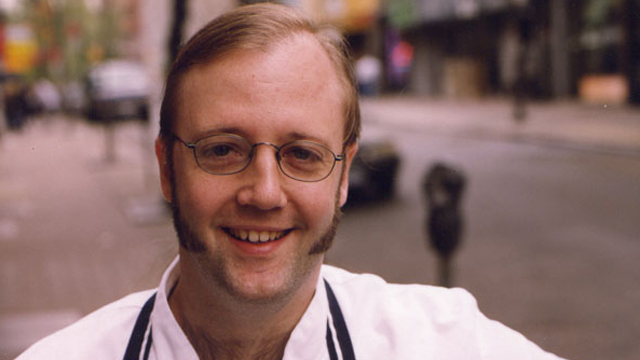
Chef Wylie Dufresne believes in playing with his food—but not in the usual sense of the phrase. In his popular New York restaurant, wd-50, Dufresne applies molecular gastronomy, a field […]

If Americans were paid to eat less and exercise more they might be motivated to lose some weight—and save us a bundle on health care—says Dr. Barry M. Popkin, director […]
With the Web tipped to soon eclipse friends as the primary way of finding mates, researchers are relishing online dating as a potent peephole into dating behaviour.
Researchers have found that most migrating birds and other animals are just “following the leader”, which has serious ramifications as their habitats become more fragmented.
Ross Douthat ponders baseball’s decline into sordidness as Roger Clemens becomes “one of the many…superstars credibly accused of using performance-enhancing drugs.”
Are Americans right to be pessimistic about the prospects of their children being better off economically than they are? Gary Becker examines the grounds for this growing sentiment.
Skype is one of Michael Arrington’s “can’t live without” products but the way people use it is driving him crazy, hence this primer on appropriate Skype etiquette.
The Guardian’s Charlie Brooker blames the media for fearmongering over the ‘Ground Zero mosque’. “For one thing, it’s not at Ground Zero. Also, it isn’t a mosque.”
Notions of the tormented artist and of us being ruled by our moods are unhelpful and outdated today, especially in the field of mental health. Tom Wootton explains why.
The New Yorker examines Churchill’s real legacy and finds he was a “Hamlet in reverse”, as well as the greatest modern instance of the romantic-conservative temperament in power.rn
Financial reforms will only work — and prevent disasters — if they take into account human nature and disincentivize greed. The latest proposals fall far short, warns Neal Gabler.
“How is it that we have we learned that when our phone buzzes with a message we MUST respond?” It’s time to question how our digital identities impact on our true selves.
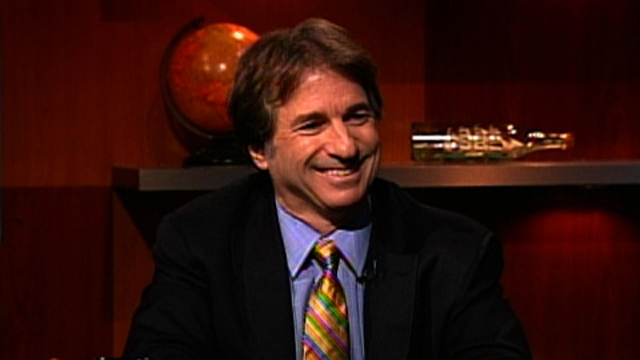
This past week, a number of top experts stopped by the Big Think offices for a video interview. Among them were lawyer and Innocience Project co-founder Barry Scheck, child and […]

Entomologist and National Geographic writer/photographer Mark Moffett knows a lot about bugs. Having studied marauder ants under renowned insect biologist Edward O. Wilson at Harvard, and then gone on to […]
“A new kind of chlorophyll that catches sunlight from just beyond the red end of the visible light spectrum has been discovered.” The discovery could help advance bio-fuel research.
An agriculture expect says a relatively simple solution could provide food security to sub-Saharan Africa: roads. More paved roads would bring rural communities out of economic isolation.
“In a Spiegel interview, Nobel Prize-winning German author Günter Grass talks about why he doesn’t fear death and why he thinks the Brothers Grimm had ‘oral sex with vowels’.”
“I still think that in going the way it has gone, policy debate has coarsened itself.” Mark Oppenheimer at Slate laments the exaggerated competition in once-civil team sports.
Despite widespread skepticism over the ensuing renewal of peace talks between Israel and Palestine, The Economist says the negotiations are more promising than Bush’s attempts.
Making $70 million in just the last five months, author James Patterson is America’s, and the world’s, richest author. The catch? He employs a team of five people to write his books.
“New technology could allow people to dictate letters and search the internet simply by thinking, according to researchers at Intel who are behind a mind-reading computer project.”
“Rising temperatures have helped blunt plants’ ability to pull carbon from the atmosphere, according to a study published yesterday in Science.” Is it a threshold in the warming cycle?
The stimulus versus austerity debate is culturally relative, says an economist for The Guardian. What matters most is that each country reassure its entrepreneurs that demand will rise in the future.
What is the relation between money and power? Will China use the profits of its growing economy for peaceful domestic purposes or to build a large military like the U.S. and U.K. did?
“Obama has promised to halve the the US deficit by 2013, but nobody seems to know how he’ll manage it.” Prospect Magazine on the uncertain future of the American current account.