bigthinkeditor

“Swiss health care is a blend of public and private, free to those who need it but with extra options for those who can afford them.” The Adam Smith Institute asks: “Would it work here?”
Given the world economic slump, the chronic problem of exorbitantly expensive weapons is becoming acute, says The Economist. Western governments are cutting defense spending.
“English does oblige you to specify certain types of information that can be left to the context in other languages.” A researcher at the University of Manchester explains how language affects thought.
“Move over solar, wind and wave power—there’s a new renewable on the block. Researchers are experimenting with devices that can pull electricity from the air.” Wired Science explains.
“New Orleans has gone through a boom while other cities have suffered during the recent recession.” But don’t be fooled, says Slate. Katrina exiled many of the city’s poor.
“Greece is about to learn whether a modern state can withdraw entitlements that people have come to take for granted but which the government no longer can afford.”
An iconoclastic economist at Cambridge University has likened free-market capitalism to that of the brainwashed characters in the film The Matrix, unwitting pawns in a fake reality.
“Any gamer, or parent of a gamer, will know the feeling. There’s a boss that just can’t be defeated.” A gamer and father on whether discovering a game’s secrets online is cheating.
“We all know that it’s good to be honest, generous, self-controlled, tenacious, and thrifty, but it’s the doing that dogs us.” A sociologist on how to inculcate the youth with lessons on virtue.
Megham Daum wanted to avoid writing about Eat Pray Love but couldn’t hold back comment on the ostensible spiritual project that has become a major marketing brand of its own.
“A new study suggests that prayer can indeed guide people away from adulterous behavior.” The Economist explains that it is God who most effectively reproaches infidelity.
“Why did our ancestors eat each other? Simple: They were hungry.” Discovery News reports on findings of cannibalism that refute explanatory theories like ritualism or starvation.
The world’s top mathematics prize that outshines even the Nobel, the Fields Medal ceremony in India contrasts the romanticized and turbulent life of mathematical revolutionaries.
“It’s possible to demean oneself by sinking to the level of those who promiscuously accept any sort of apology.” The New Yorker meditates on the politics of giving and accepting apologies.
Microsoft co-founder Paul Allen is laying claim to Internet technologies now widely used by Google, Facebook and Ebay. The Wall Street Journal reports that patent litigation is on the rise.
A new video montage of live news reports broadcast between 9:02 and 9:03 a.m. on 11 September 2001 captures the first utterances of rhetoric that define the 9/11 narrative.
Somali fisherman have made a conscious career change to piracy with Kalashnikovs and RPGs replacing fishing poles. Stanford’s Hoover Institution looks at the burgeoning industry.
“If gold were the basis of the world economy, each ounce would be worth about $6,000.” The Christian Science Monitor asks what it would take for currency to return to the gold standard.
A field not traditionally considered profitable by men, women are taking the Pakistani art market by storm. Female artists and curators and gaining international exposure as a result.
A Columbia professor of law and economics says the U.S. is idealizing manufacturing as a solution to the economic crisis, but that service and information industries perform just as well.
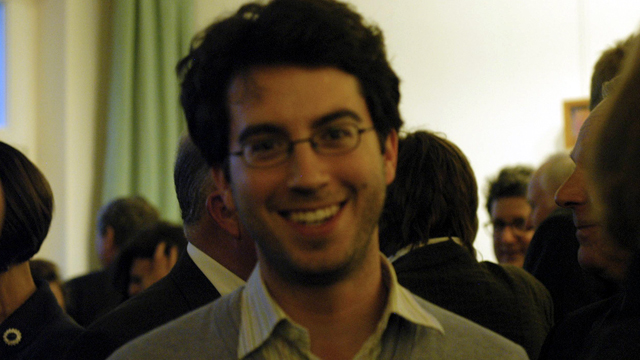
A novelist and two neuroscientists came by Big Think’s offices this past week. Jonathan Safran Foer, one of the most acclaimed young novelists of the past decade, spoke to us […]
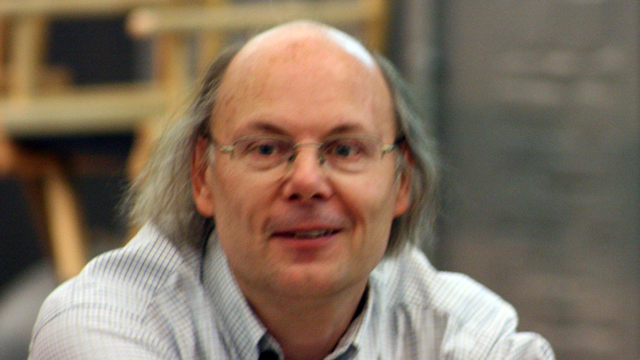
If you’re not a computer programmer, the name Bjarne Stroustrup might not mean that much to you. The creator of the coding language C++ isn’t exactly a household name. But […]
A groundbreaking 1981 study that showed that it is not our physical state that limits us, but our mindset about our own limits, is set to feature in a movie starring Jennifer Aniston.
Facing a slow-motion food crisis the world should learn from Brazil, which reacted to its farm crisis with boldness, expanding production through science, not subsidies.
Mother Teresa, who would have turned 100 this week, helped spark a new missionary model which increasingly sees ordinary people volunteer while on vacation.
It would be nice to dismiss the stupid things that Americans believe as harmless, writes Timothy Egan, but a culture of misinformation can have very serious consequences.
German city planners are hoping that applying “environmental psychology” will help make Hamburg’s huge new urban development a success.
The Telegraph says that after more than a decade of “virtually unfettered immigration”, the U.K. “is desperately overcrowded” and public concern is not xenophobia or racism.
Author David Rieff laments the rise of “fast thought” in books and decrease of works written in the spirit of scholarly investigation, not just to illustrate a thesis.
Retired intelligence officer Paul R. Pillar says the U.S. should try harder to curb the export of terrorists — particularly homegrown ones — and terrorism from its own territory.