bigthinkeditor

Christian nationalists, who believe God has chosen the U.S. as the promised land, succumb to “fear, misery, confusion and self-reproach,” says one writer who investigated the Call 2 Fall movement.
Harold Fromm criticizes vegans for their vanity and pretentious sense of virtue. “However delicate our moral sensibilities, it still remains that to be alive is to be a murderer,” he says.
Ernest Hemingway didn’t think so. The author and aficionado of the activity thought it more a drama where the bull and the bullfighter play their respective roles: death and danger.
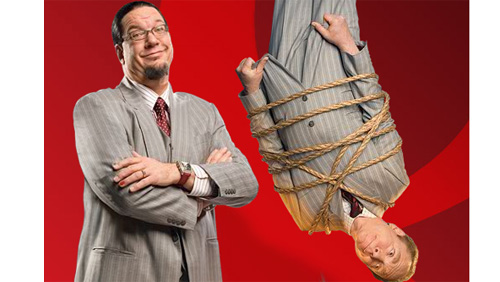
Penn and Teller are not like other famous duos, says Penn Jillette, the larger and more talkative of the two magicians. Lennon and McCartney, Martin and Lewis, Jagger and Richards—these relationships were […]
Would it be cheaper to deal with climate change when it comes, rather than take preventative measures now? The Atlantic Wire considers the ideas of Al Gore, Paul Krugman and Ezra Klein.
“If everyone writes, there’ll be more bad novels. And if writing is thought sacred, they will become more boring.” The Telegraph doesn’t think the novel is dead, just boring.
Twenty-four years after the nuclear accident at Chernobyl, Scottish sheep are finally free of radioactive material brought on by heavy rain following the meltdown.
After dogs, horses may be man’s best friend, new research suggests. Based on their ability to understand subtle eye and body movements, horses can grasp human dispositions relatively well.
Cases of human irrationality are manifold, but Wired Science has found a new one: Do the outcomes of local sporting events influence voters during political elections? Yes, two studies say.
“Feeling down? Having a stimulating conversation might help.” Scientific American looks at a study suggesting that deep conversations are more satisfying that superficial ones.
Historically a bedrock of U.S. foreign policy, Israel is losing support from outside and inside the U.S. because of its recent aggressiveness, says Jonathan Freedland for The Guardian.
A recent Supreme Court ruling that denies a Christian college organization access to campus facilities violates the First Amendment, says Dennis Byrne at the Chicago Tribune.
“Repeal of the estate tax imposes significant costs on the taxpaying public and promotes concentrations of wealth that harm our democracy,” says a Boston College law professor.
Robert Wright says that the Internet is scattering our brains, sacrificing individual coherence for a superorganism where people are but single cells of a greater, electronic being.

Online dating is “an incredibly unsatisfying experience,” says Duke behavioral economics professor Dan Ariely, the author of “Predictably Irrational.” In fact, his research has found that each date you set […]
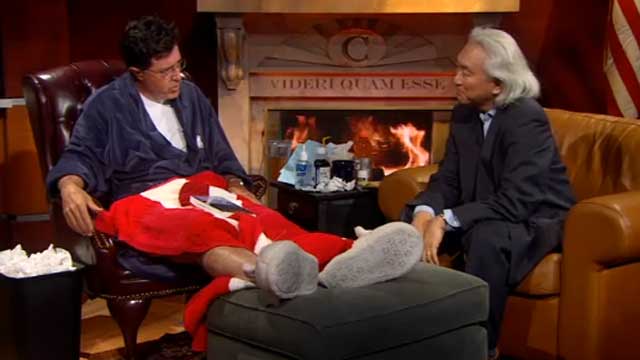
“Corruption has marred every aspect of Somali society,” says Afyare Abdi Elmi, a professor of International Affairs. It is, he says, the most corrupt country in the world.
Personalities are typically thought to be genetically determined; not so, says the New Scientist: “We may learn our personalities, and adjust them to situations we find ourselves in over time.”
“Scientists are trying to regulate the weather with ambitious experiments that may even tackle global warming. Is this a great step forward?” The Independent looks at the strangest of these ideas.
The author of a new book on race begins with a controversial hypotheses: it was desegregation that destroyed thriving black schools and created a culture of underperformance.
“New research finds that attractive people in the business world or academia may be at a disadvantage when they’re evaluated by a member of the same sex.” More at Miller-McCune.
The language police at Salon lament the rise of “No problem” over “Thank you” because, they say, the former shrugs off bonds created by social interaction instead of affirming them.
Jeffrey Wasserstrom gives five reasons why we need not fear the rise of China. Among them: “Some of the really scary things about China have U.S. parallels,” such as environmental disregard, he says.
Jagdish Bhagwati, professor of economics and law at Columbia, dispels five common myths about free trade such as, “Free trade may increase economic prosperity, but it is bad for the working class.”
Prior to the famous extinction of the dinosaurs, another mass extinction paved the way for their emergence, an emergence that happened much faster than previously thought, says The Economist.
Be an individual, just like everyone else. Laurie Essig at True/Slant says American culture prioritizes creativity in romantic relationships in a way that dictates conformity and materialism.
“Those who haven’t abandoned Juárez may be watching the death of it, both day and night.” Sarah Hill gives a tragic account of the Mexican city gone from boom to bust to nearly dust.
“It seems like we in the West have made a tradeoff between self-reliance and physical comforts and social well being. So, which is more important?” asks a Notre Dame psychology professor.
“What exactly is the Iranian threat?” asks Noam Chomsky in his latest article. The linguist turned political activist finds glaring hypocrisies in U.S. foreign policy toward the Middle East.
“Fiction has now become a museum-piece genre most of whose practitioners are more like cripplingly self-conscious curators or theoreticians than writers,” says the polemical Lee Siegel.