bigthinkeditor

Loren Coleman is the father of American cryptozoology, or the exploration for animals whose existence is generally doubted. There’s more to it than Bigfoot and the Loch Ness Monster, Coleman says.
A double problem faces the American arts: declining government funding and a shift of priorities in the private sector away from cultural patronage. A new approach is needed.
As women in rising countries like China, Iran and Turkey lead increasingly independent lives, they are having children later in life and in fewer numbers which could prevent the much-feared population crisis.
Americans of European descent have a moral obligation to advocate for legal Mexican immigration because their ancestors once benefited from the same land, writes Conor Friedersdorf for The Atlantic.
Empires, big business and modern communication and transportation technologies account for the rise of sports, which today has reached near-mania, writes Intelligent Life Magazine.
After decades of research and testing, oncologists have found treatments that demonstrably prolong the life of patients with melanoma, lung cancer and leukemia.
The Pentagon is on the lookout for 260,000 classified U.S. embassy messages that have allegedly been given to WikiLeaks by a former American intelligence analyst in Iraq.
Prince Charles, England’s royal environmentalist, believes that the Quran teaches important environmental lessons such as being one with nature and living within the environment’s limits.
“As U.S. employment patterns evolve, a diploma is no longer a guarantee of a better job and higher pay,” says the L.A. Times. Vocational labor is gaining most as the economy recovers.
“Far from making us stupid, new media technologies are the only things that will keep us smart,” says Steven Pinker in his Op-Ed for the New York Times.

Past Big Think interviewee Dr. Harry Ostrer made headlines today for discovering a genetic closeness between the two Jewish communities of Europe, the Ashkenazim and the Sephardim. According to the […]

Abe Foxman, Director of the Anti-Defemation League, stopped by Big Think today to talk about the state of anti-Semitism in America today. Among other things, we asked him if it […]

Glenn Roberts, the founder of Anson Mills in Columbia, S.C. wants to save Southern food culture, one grain at a time. He thinks the traditional cuisine of the South is […]
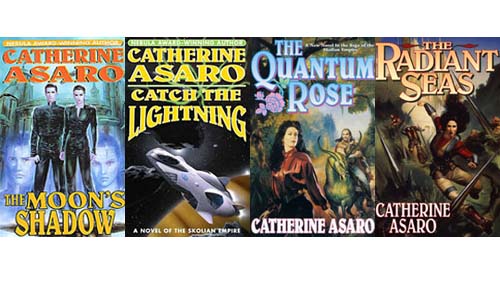
Catherine Asaro, the bestselling science-fiction author, uses concepts from physics and math to inform the fantastical stories of her characters. In a recent interview with Big Think, Asaro describes how […]

Sustainability obviously means a lot to the founder of the Copenhagen Climate Council. But Erik Rasmussen, also the CEO of Scandinavian’s leading independent think tank Monday Morning, isn’t sugar coating […]
The L.A. Times takes aim at Apple in its editorial, saying the “bare-knuckled competitiveness” that helped it ascend may now be a liability.
Instead of bows and arrows, Brazil’s Surui people are using the Internet, GPS and Google Earth to stop the destruction of rainforest, reports Juliane von Mittelstaedt
A major surprise from two genetic surveys — and of great interest to historians — is the genetic closeness of Europe’s two Jewish communities, explains Nicholas Wade. rn
“South Africans live in separate but parallel worlds, and old divides continue to exist, 16 years after the end of apartheid.” Ullrich Fichtner on the violence, victories and hope.
With Asia expected to overtake Europe in pharmaceutical sales, researchers are focusing on the predominant diseases, and the medicines most likely to work, in emerging markets.
Worried that Twitter is shrinking attention spans, search engines lowering intelligence? Steven Pinker reassures us that I.T. is actually keeping us smart.
I.T. is waking up to the benefits of minimalism thanks to feature fatigue among consumers and strong demand from less affluent consumers in the developing world.
Meghan Daum opines on beauty amid a new book on workplace discrimination against the “unattractive” and a lawsuit by a woman claiming she was fired for being too attractive.

When Bill Frisell was young, he says remembers watching the “Mickey Mouse Club” on his family’s new television. “The leader of the Mouseketeers was this guy named Jimmy and he’d […]
Researchers hoping to fuse neuroscience with marketing are studying brain patterns of consumers with the goal of tapping into their subconscious material desires.
Apple’s strict policy against pornographic apps has resulted in an illustrated adaptation of James Joyce’s landmark novel Ulysses being censored; the novel itself was once banned for its sexual content.
One in eight people fled their homes in Northwest Pakistan in 2009 because of the war in Afghanistan; the area is a “human-rights free zone” according to a new report from Amnesty International.
Forty percent of the world doesn’t use toilets, says UNICEF, resulting in disease carried by dust and flies and contaminated food and water supplies — the toll is 2 million dead annually.
NASA says our sun is preparing for a stormy period and, according to the National Academy of Sciences, “A major solar storm could cause twenty times more economic damage than Hurricane Katrina.”
Ideological debates that lack context during a financial crisis are like a bikini, says Marc Lackritz of the Financial Times: “What they reveal is suggestive; but what they conceal is vital.”