bigthinkeditor

“Most people who appear phenotypically ‘black’ enjoy neither the privilege nor the inclination to play around on a government form designed to track and remediate generations of prejudice,” writes Patricia Williams.
Subjects who dreamed about a virtual reality maze that they had been in a few hours earlier were quicker to get out of it the second time they were tested.
President Obama can reshape the debate over “the idea that the descendants of American slaves should receive compensation for their ancestors’ unpaid labor and bondage,” writes Henry Louis Gates Jr.

“The laughter is unlike most settings you’ll find.The level of intensity, the adrenaline, the stakes are incredible.I mean, it is addictive.” As an actor and playwright, you might think John […]
New research finds that the movements of our bodies “influence the recollection of emotional memories, as well as the speed with which they are recalled.”
A taxpayer-funded bar in the German city of Kiel caters to a very particular clientele: unemployed alcoholics. The bar aims to keep its patrons from disturbing other citizens during drinking binges.
The U.S. Treasury has unveiled a redesigned $100 bill, with new features “aimed at thwarting counterfeiters armed with ever-more sophisticated computers, scanners and color copiers.”
There is a lot of evidence suggesting life exists on Mars, says astrobiologist Dirk Schulze-Makuch. “It’s actually more scientifically outrageous to think that Mars is and always has been sterile.”
Plant breeders are offering hybrid heirloom tomatoes this year that they claim “have the distinct flavors and funky looks of heirlooms but are more disease-resistant and abundantly productive.”
“The ‘birther’ myth is the political equivalent of a horror-movie villain: Not only does it refuse to die, but every time someone tries to kill it, it only comes back stronger,” writes Christopher Beam.
“We may not know why we sleep, dream or wake up, but these states are never static,” writes author Siri Hustvedt. There is a continuum of perception from unconsciousness to full self-consciousness.
“What if the Eyjafjallajokull ash cloud is “not just a minor volcanic hiccup, but the beginning of an event that causes in time a mass extinction of some form of earthbound life?” asks Simon Winchester.
“Combining as it does great energy expenditure and risk with apparent pointlessness, [play] is a central paradox of evolutionary biology,” writes anthropologist and neuroscientist Melvin Konner.
Women remain much choosier than men when it comes to dating. Is this difference a vestige of our early ancestry? Or could it be the result of something more modern and mundane?

Is there anything we can do about the global increase in tropical storms? Ernst Weizsäcker, co-chair of the U.N.’s International Panel for Sustainable Resource Management, thinks Hurricane Katrina may have […]
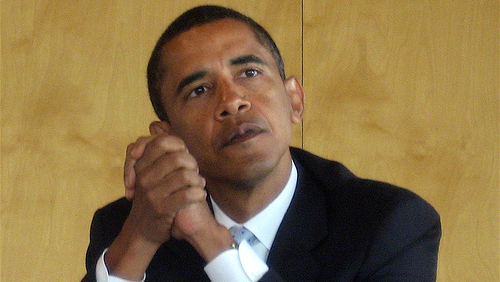
Has President Obama given up on being bipartisan? New Yorker editor David Remnick, author of the new Obama biography “The Bridge,” thinks that while the President’s political personality “aims toward […]
Mark Twain was a great American novelist, but Nathanial Rich notes that in his own lifetime—which ended exactly a hundred years ago today—he was read more widely as a travel writer.
Researchers have found that bees see the world nearly five times as quickly as humans do, helping them to navigate through bushes and find food.
University authorities—seeing the distraction that the Internet and social media can cause—are trying a varied of methods to get students to turn off their computers in class.
“Individuals and businesses who are feeding a $700 million global market in offsets are often buying vague promises instead of the reductions in greenhouse gases they expect,” writes Doug Struck.
To promote greater transparency, Google is creating a tool to give people information about government requests for content removal and user data.
“No poet has ever been so influential, so controversial, and so little read” as Ezra Pound, writes Jamie James. After him, “anyone aspiring to be a poetic messiah would be shunned as a charlatan.”
The adoption of enhanced incentives for domestic enterprise in the Third World may help poor countries compete in the global marketplace, writes David Landes.
Several studies have concluded that obesity accelerates the process of dementia. People who are overweight in their 40s are more likely to show a rapid, pronounced decline in brain function in their 70s.
Nearly fifty years after the invention of the birth control pill, we now have a wide variety of options for contraception. Yet nearly half of pregnancies in the U.S. are still unintended.
Scientists have used DNA to trace the evolutionary split between head and body lice to 190,000 years ago. They say this may indicate how long humans have been wearing clothing.
When it comes to finding a successor for a top executive, an “inside outsider” might be the best option. As Harvard Business School Professor Joe Bower explains in his Big […]

“If it’s any good, [literature] can make you feel less alone in the world...It gives you some late-night company with your memories and your sorrow.Literature does touch people; it’s not […]
A British bioethics council is asking the public whether it’s ethical to use financial incentives to encourage people to donate organs.
In a new book, Timothy Ryback examines Adolf Hitler’s private library. He asserts that books were important in shaping the Führer’s life, and looks for insights in the books’ margin notes.