Computer Plays Chess without Brute-Forcing Solutions
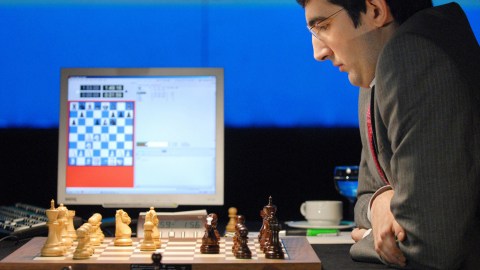
Matthew Lai has developed an AI that approaches the game of chess more like a human.
Until recently, conventional chess-playing computers have won chess match after chess match merely through brute force — that is, considering all possible moves to find which one would most optimal. It’s the method IBM’s Deep Blue used to beat world chess champion, Gary Kasparov. It had to search through somewhere around 200 million positions per second to find the next optimal move. This processing power is beyond human, sure, but it’s a waste of energy. Compare that to Kasparov, who managed to keep up, even though his brain was only able to consider a handful of moves each second. The trick is that Kasparov’s brain was able to narrow the field of search, whereas conventional computers that need to consider all possible moves lack this trait. Well, until now.
For machine learning, as Microsoft Director of Search Stefan Weitz explains, there’s a major difference between a search engine that can critically analyze your search queries rather than simply scouring the web’s index of results, which is exactly what sets Lai’s creation apart from the rest.