bigthinkeditor


Dr. Fatih Birol, the chief economist of the International Energy Agency, says he has never owned a car. While he admits his decision may seem “unusual” to people in the […]
“There’s this core of people who have become very, very powerful who can do enormous damage to the rest of society and honestly, they really don’t care,” says Simon Johnson, […]

“I remember I was reading Svevo, it was ‘The Confessions of Zeno’…And I looked—I was lying in bed and I looked down at the floor and there was a little […]

Other cultures may value conformity, but Americans are rugged individualists. For better or for worse, we think and choose for ourselves—from which indie band we listen to on the subway […]
The feminist battleground, with its slogans, marches, and campaigns for reproductive rights, has given way to the playground and the fight for lactation rights, stroller rights, and birthing techniques.
A new study suggests that some patients who don’t tolerate antidepressant medications could benefit from a non-invasive treatment that stimulates the brain with an electromagnet.
Charles Murray says we should “finally acknowledge that standardized test scores are a terrible way to decide whether one school is better than another.”
A Brooklyn lawyer is hoping to break new legal ground by offering a brain scan as evidence that a key witness in a civil trial is telling the truth.
“How did we get to the point where just about every new classical dance is meaningless?” asks Laura Jacobs. She thinks premieres today all feel derivative of Forsythe, Tharp, or Martins—or trade in clichés.
Could the fact that so many publishing executives are women mean that there are fewer books being published that appeal to male readers?
Why do so many top Ivy League grads go to work for Wall Street firms like Goldman Sachs and McKinsey? James Kwak says it’s because they offer well-paid, generic business training.
Analysts at the National Counterterrorism Center say the terrorist threat to America is becoming more decentralized and less deadly. But the terrorists are also harder to find.
“The outlets for vindictiveness have multiplied almost to infinity—and your reputation is more fragile than ever,” writes Jeffrey Zaslow. “All of us now live under the threat of easy and instant humiliation.”
For individual birds affected by the oil spill in the Gulf of Mexico, having a person clean the oil from their feathers may be their best chance of survival.

Incarceration rates quintupled over the last third of the 20th century, and conventional wisdom is that it must have something to do with a corresponding rise in crime. Robert Perkinson, […]

Atheism makes for “great blood sport“—at least that is what writer Yann Martel believes. But the writer is far more interested in what cannot be reasoned, and in his Big […]
A growing number of artists are “rummaging through the life sciences in search of materials, ideas, cosmic verities, tragicomic homilies, personal agency, a personal agent, a way to stand out in the crowd.”
“How could a writer whose prose breathed in life so fully take his own?” asks Michael O’Donnell of David Foster Wallace. A new book tries to illuminate the writer via a five-day road trip.
“It’s time for Democrats, even liberal Democrats, to start looking at unions and unionism with deep skepticism,” writes Mickey Kaus.
“When parents today worry about their child not meeting developmental norms, especially for motor skills, they’re too often worrying needlessly,” writes Nicholas Day.
The idea that one’s disposition can be analyzed by looking at their handwriting is considered spurious, yet medical graphology—the use of handwriting to detect disease—has diagnostic validity.
Time “flows at different speeds in different places and that is the key to traveling into the future,” writes Stephen Hawking, who speculates about how we might construct a time machine.
Scientists have discovered that shooting high-powered lasers into the sky can create the germ of a rain cloud, opening the door to eco-friendly cloud manipulation.
John Tierney looks at research indicating that male chimpanzees use “tools” (crackling leaves) to show females that they are ready for sex.
“If the United States is to have a sustainable toehold in Asia, Washington has to start paying serious attention to some countries in the region that are not China or India,” writes Ernest Bower.
When it comes to compliments “we often hear what we want to hear,” writes Elizabeth Bernstein. If we are feeling secure it’s easy to register the praise, but not in times of self-doubt.
Today marks the first installment of Big Think’s newest series, “Moments of Genius,” sponsored by Intel. We sat down with math and science thought leaders—from the inventor of the very […]

Today Big Think is pleased to welcome the very talented Maria Popova, of Brain Pickings fame, to our regular blogging team. Known for “curating eclectic interestingness” from around (and beyond) […]
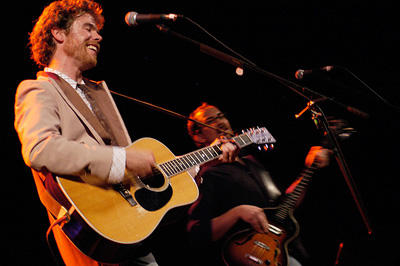
“The idea of America is that we all have our own unique voices…and that’s the same as guitar.Guitar is not an instrument that’s stuck in a canon, or stuck in […]
“The secret of excellent proofreading is caring intensely about getting things right and loathing error with an intensity that perhaps only fascism or an alimony-collecting ex-wife deserves,” writes Joseph Epstein.