bigthinkeditor

Is decriminalizing marijuana while leaving anti-drug laws on the books a bad idea? Does it allow police to selectively enforce law and create contempt among the public? The Economist weighs in.
The Financial Times appeals to an Oxford philosophy professor to find the essence of beauty. Darwin said it was sex. For Estée Lauder, it was glamor. But what does beauty mean today?
“What happens to our civic life when we’re all too scared to participate?” asks Slate. Expert witnesses have recently refused to testify in court, fearing reprisal for divulging their political views.
As summer is upon us, what does psychological research tell us about how we spend our leisure time? The answers could provide for a more enjoyable vacation in the coming months.
“The nature and depth of the financial crisis is forcing us to reconsider some of the basic tenets of financial theory,” says Paul Volcker who maps his ideas for reform in The NY Review of Books.
The New Statesman ruminates on what democracy might look like in an Islamic republic, what Eastern countries are tending that way, and why the West must make tough compromises.
“When something is free, you tend to use more of it. It’s true for buffets and open bars, and it’s the same with carbon,” says The Atlantic while advocating for a carbon tax to slow global warming.
“The causes of underfunded pensions are similar throughout the developed world,” says the L.A. Times while commenting on France’s recent move to increase the retirement age.
The Big Money shines light on for-profit colleges that take federal money but use far more revenue for recruitment and marketing than for educating their students—a higher education crisis?
Physicists have developed an experiment involving super cold matter and an empty elevator shaft that will test one concept crucial to Einstein’s Theory of General Relativity.
“Reality is already outpacing ‘Minority Report,’ the 2002 film that imagined technology in far-off 2054: Pre-crime systems, 3D video and gesture-based computing are already here,” says The New York Times.
Miller-McCune reports that, “Using artificial intelligence and the graphics techniques behind ‘Avatar,’ a USC institute creates ‘virtual humans’ and interactive immersions that train American soldiers.”
“As counterintuitive as it may be to say so, oil is a green fuel, while ‘green’ fuels aren’t,” says Jonah Goldberg, who makes a sobering and conservative assessment of America’s need for black gold.
Naomi Klein takes stock of the Gulf oil spill and finds a deeper meaning beneath mechanical failure on Deepwater Horizon: the West’s cultural hubris in thinking it can control Nature.
For the first time, researchers have cataloged forty distinct signals orangutans use to communicate with each other, including gestures for “I want to play” and “Give it to me”.
Art critic Karen Wright charts her run-ins with English painter David Hockney over the last ten years. The prolific painter has taken to photography and even drawing on his iPhone.
Ten years after sequencing the entire human genome, some call the achievement a false start; The Economist calls it only the beginning of a marathon that has begun to revolutionize biology.

Erik Rasmussen, founder of the Copenhagen Climate Council, doesn’t try to pretend that COP 15 was anything but a failure. The talks concluded without a global climate treaty, and Rasmussen […]
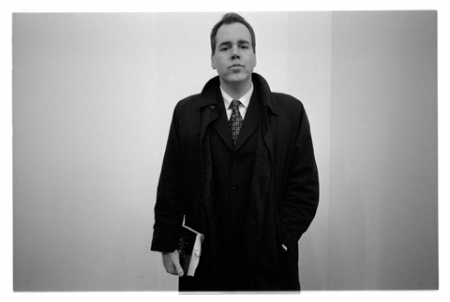
At what point does graphic violence and sex turn a literary work into pornography? What are the merits of a story filled with imagery so shocking that it forces some […]

Bard College President Leon Botstein believes that for about half of the high school students in the U.S., college should begin at age 16. “We should have a system that […]
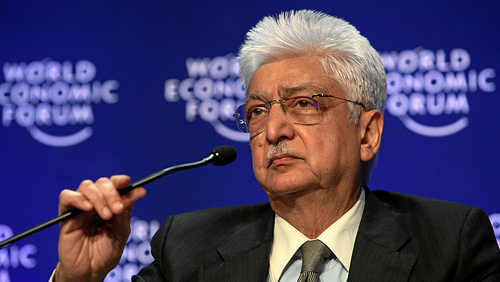
Following in the spirit of U.S. tech mogul Bill Gates, billionaire Azim Premji, the Chairman of Wipro and the second richest man in India, announced recently that he plans to […]
TV, long considered a ‘wasteland’, is enjoying a widely acknowledged creative renaissance at the same time as movies are striking out. Joseph Childers examines why.
‘Student athletes’ are now quasi-mercenaries, performing to boost schools’ bottom lines, argues James O’Toole, who calls for moral leadership from the top institutions.
With the Ronnie Lee Gardner execution making news, Margot Sanger-Katz finds the (limited) research suggesting that the firing squad is actually a pretty good way to go.
“Will Iceland get from bits what Switzerland gets from bank accounts?” the Economist’s Babbage blog asks as Iceland moves closer to being a digital media haven.
Research and a TV program are debunking the myth that fathers who enjoy a close bond with their children are a modern phenomena, reports Steve Humphries.
“Some good may have come out of the astonishing ice loss (in 2007),…the Arctic science community came together to try a new approach to climate science,” writes Alexis Madrigal.
As experts go public with claims that the entertainment industry is exaggerating piracy losses, Ben Jones argues for the industry to put up (real data) or shut up.
German commentators think Barack Obama is in danger of turning into an idealistic, one-term president like Jimmy Carter, explains Michael Scott Moore.
“(Richard) Dawkins and co. are appalled by the belief in God, (Christopher) Hitchens is far more appalled by the idea that anyone would want to obey Him,” observes Ross Douthat.